The Second World War ended in Europe in May 1945 with Germany’s surrender in Reims and in Karlshorst. One special object at the museum bears testimony to this capitulation and is being shown here for the first time. It is a long, two-part piece of paper from a telex machine that stood in the USA’s War Information Office in London, where the announcements of Germany’s surrender by the Reuter news agency were received.
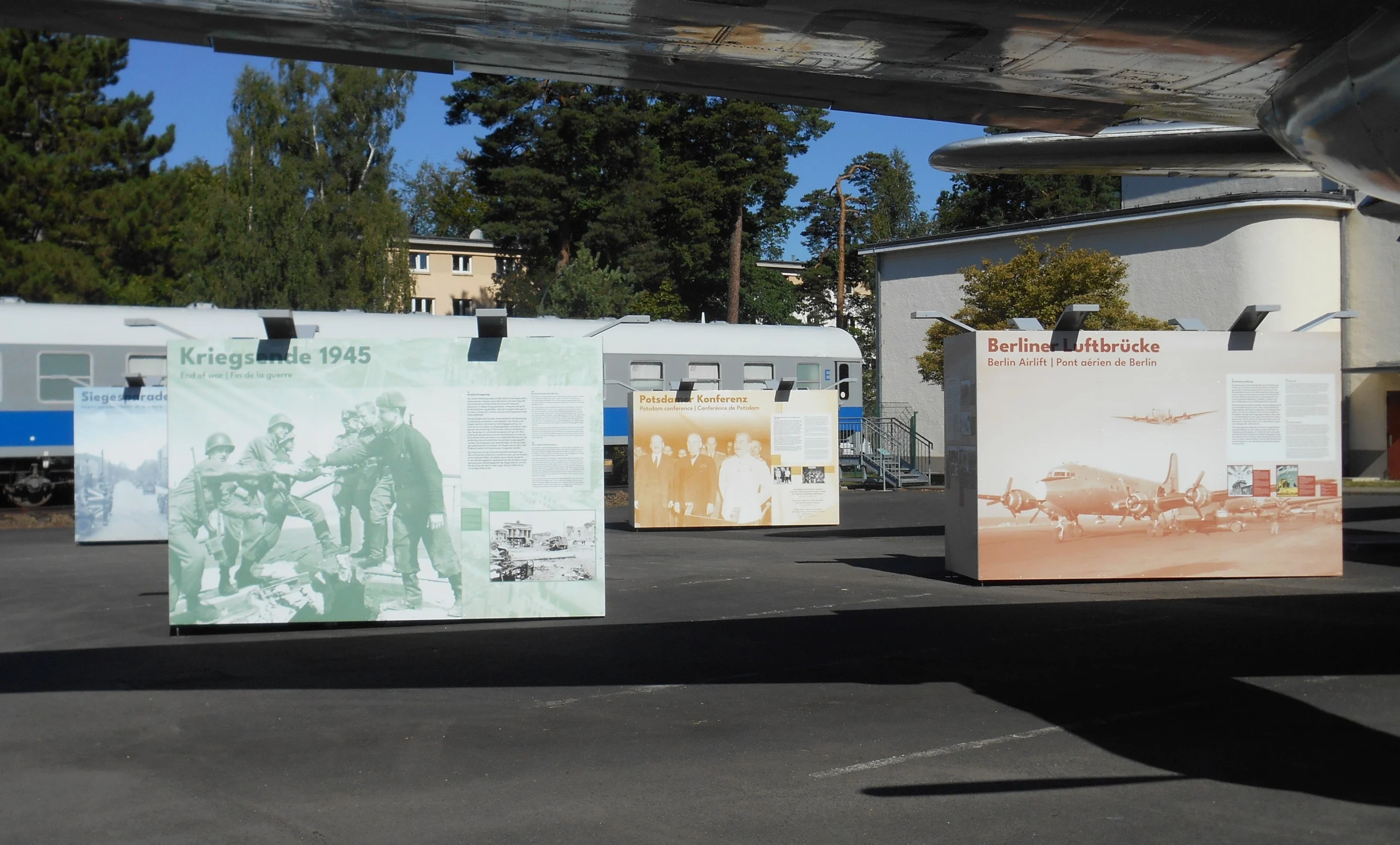
Germany was divided into four zones of occupation, and Berlin into four sectors. The presence of the victorious powers in the city was omnipresent in 1945 and was visually reinforced by a series of victory parades. The city was in ruins and had to be rebuilt.
A new beginning for Germany was negotiated at the Potsdam Conference in the summer of 1945, where the course was set for the country’s political and economic future. The outcomes of the two-week conference reflected the shared core ideas of the victorious powers, but these were not implemented jointly in the period that followed. The division of the city and the blockade of Berlin in 1948 made the collapse of the war alliance visible for all to see. The blockade and the successful airlift to Berlin by the Western allies as a response to it represented the first confrontation in the ensuing Cold War.
As such, in the post-war years, Germany and Berlin came to symbolise the failure of a common post-war policy by the victorious powers as well as the division of the Western world into two camps, which only came to a temporary end in 1989. These themes are presented clearly in the outdoor exhibition.